Puddingstone
Hertfordshire Puddingstone is a naturally occurring rock
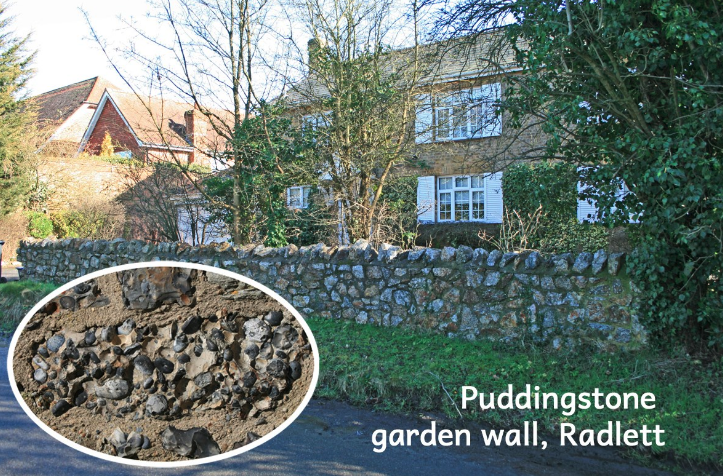
Puddingstone is on your doorstep. If you walk around Radlett, as I often do in these pandemic times, you may have occasionally noticed some unusual irregular stone blocks in walls and buildings?
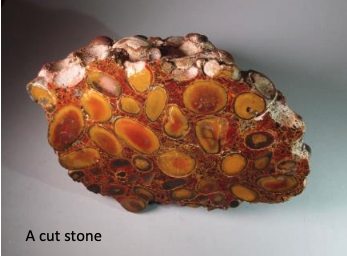
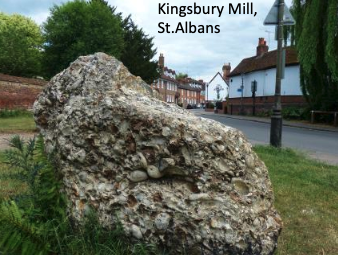
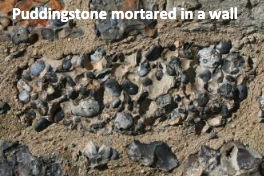
Their composition looks a bit like concrete—with pebbles embedded in a cement-type material. But this isn’t the sort of material found in a builder’s depot in a ready-mix bag. It’s a composite stone that’s million of years old and only found in Hertfordshire. It’s Puddingstone, said to be one of the world’s rarest rocks. Radlett is close to two recorded puddingstone outcrops known as Regionally Important Geological Sites, or RIGS. Both are situated on private land on Woodhall Estate.
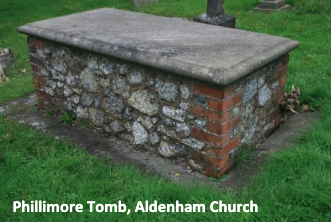
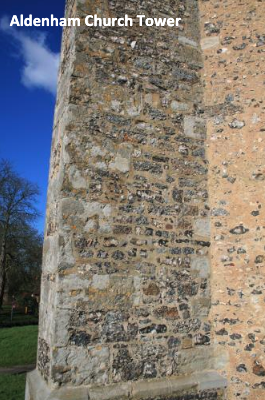
Puddingstone itself is officially described as a ‘conglomerate of small pebbles bonded by silicon. Its formation began when small, pebbles, mainly flint, were deposited in river beds and then covered by clay. Later, during the Ice Age, this mixture was compressed and became bonded together, strong enough to resist crushing.’ Examples can be seen in and around Radlett—Gills Hill, Batlers Green, Aldenham Avenue. Aldenham church tower is a good location too. There may be others—we at the Museum are always keen to learn of new Puddingstone sites, so if you find one, why not email: info@radlettmuseum.com? The Museum, of course, has pieces on display, so why not call by to see them!
Graham Taylor